Key Takeaways On Workplace Culture, Conducting Terminations the Right Way, and HR’s Use of AI
September 30, 2026|By: Lisa I. Fried-Grodin, Esq.
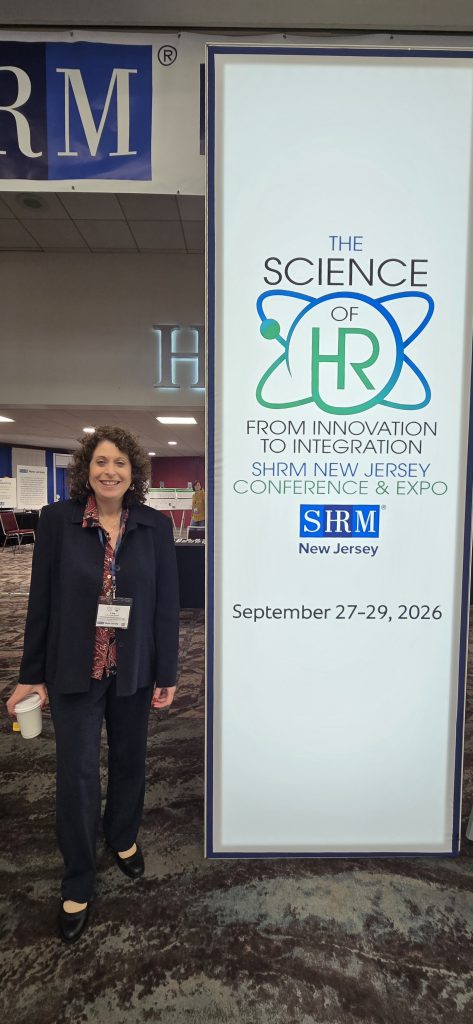
Fried-Grodin Employment Law’s Lisa Fried-Grodin attended the SHRM NJ Conference in September 2026 and has several tips to share from some of the speakers and attendees at this conference.
THE IMPORTANCE OF ADDRESSING AN UNHEALTHY WORKPLACE CULTURE: (FROM THERESA HUMMELL-KRALLINGER, HIGH FIVE PERFORMANCE INC. AND ATTENDEES IN THE CULTURE IS KING SESSION):
Maintaining a healthy workplace culture is something HR managers feel passionate about, but find it difficult to achieve or maintain if they do not have the authority or influence to make it happen. Meanwhile, not being able to implement changes to improve an unhealthy culture has significant consequences: high turnover, people talking about each other and not to each other, an Us v. them mentality, lack of trust and accountability, the need to play politics to get things done, palpable fear, a lot of workplace fighting, and bad behavior being tolerated for some but not others.
TERMINATION AND PERFORMANCE MANAGEMENT TIPS FROM MICHEL COHEN, DUANE MORRIS):
Termination:
Yes, there is employment at will, but “don’t terminate because you can. Terminate when it is the last resort.”
The better you treat employee in a termination meeting, the less chance they will sue you.
For employees that have worked for the organization for more than a few months, before terminating for performance, give the employee feedback on how they are doing regularly, and when a performance issue has become more significant, give them an opportunity for them to comment on the performance issue, a real opportunity to improve, and a realistic timeframe to address the performance issue. (Exceptions could apply for certain egregious or dangerous conduct).
Don’t terminate someone over voice mail or email.
Don’t make comments that are really about making you, the decision-maker feel better. Avoid saying things like “Someday you will thank me when you find a job that is a better match for you”; I know how you feel”; “This is harder on me than it is on you”; “I’m sorry”; or “There was no choice but to terminate”.
Don’t tell people they are not being terminated for a performance reason, if that is the actual reason.
If you as the HR manager can’t explain the termination decision, go back to the employee’s manager and dig further into what happened before proceeding with termination.
Additional termination tips from Lisa Fried-Grodin:
Being ambiguous or silent about the reason for termination is a mistake that will likely result in the employee consulting an employment attorney to figure out the reason.
Don’t say “It’s just not working out” without details as that statement begs the follow up question, Why? If the person communicating the termination decision refuses to answer the employee, then the question in the mind of the employee is what are they hiding?
Do not tell a terminated employee that you “are not a good fit” for the organization as that just raises questions about which groups of people in an organization are the “right fit”. If there is a specific competency or other job requirement the person has not mastered, tell them what it is.
CAUTIONS FOR HUMAN RESOURCES PROFESSIONALS USING ARTIFICIAL INTELLIGENCE (FROM KELLY SCHIAPPACASSE AND LEANNE LANE COYLE, FISHER PHILLIPS:
Use AI as a starting point but not the final word. A human must be involved in verifying that AI output is correct and adding necessary information. This is true when using AI in recruiting and hiring, drafting job descriptions, handbooks, and emails about new benefit programs, and when using chat bots on company portals.
Never rely on an AI tool’ s recommendation to make a decision about whether or not to interview a candidate, hire a candidate or evaluate/discipline employees. AI tools can hallucinate, make recommendations based on unlawful criteria and can’t possibly know all there is to know to make these important decisions.
Think before you type in a prompt. Unless you are an attorney, all of your AI prompts and the AI output is discoverable in a litigation. If what you are typing is something that you would not want to hear read to a jury, you shouldn’t be using AI for this.
Don’t use AI to replace calling an employment attorney. Here are just a few reasons why:
In addition to the content being discoverable, an AI tool is not trained to ascertain how nuanced facts apply to the relevant employment law and to make the accurate legal analysis that is required. Additionally, you could be sending out letters to employees with incorrect or missing information that will create problems for the company down the road.
If You use an AI tool to monitor your employees without checking with employment counsel, you could be violating state monitoring and privacy laws and/or employees’s rights under the National Labor Relations Act.
AI tools can be useful in workplace investigations to synthesize witness interviews and documents gathered, but the investigator has to be the one assessing the credibility of the evidence to be able to make the relevant factual finding.
Monitor chat bot questions and answers on company portals for questions that may trigger legal rights, such as requests for accommodations.